Product experience
Useful product pages, specifications, applications, and inquiry paths designed around how technical buyers evaluate a purchase.
Byer Co / Build + Growth
A better website is only the beginning. We build the connected foundation for technical manufacturers: a useful buyer experience, fast technology, reliable sales handoffs, and reporting leadership can use.
Build connects the system. Growth keeps improving it
One connected foundation
The page, the inquiry, the sales conversation, and the report belong to the same system. We scope them together so each connection has a purpose and an owner.
Useful product pages, specifications, applications, and inquiry paths designed around how technical buyers evaluate a purchase.
Capture available campaign, referral, and inquiry context so the source of a lead can follow it into the sales process.
Map inquiry fields, assign ownership, and route leads into the CRM your sales team actually uses.
Bring agreed marketing and sales measures together, from acquisition and qualified inquiries to pipeline and CRM-recorded revenue.
User experience
Your buyers have technical questions, not time to decode your navigation. We organize products, applications, specifications, and supporting content around what they need to know before making contact.
Clear inquiry paths capture the product and application context your team needs. Responsive layouts, accessible controls, and performance testing are part of the build, not a finishing pass after the design is approved.
Our preferred technology
Svelte compiles interface components into browser code. SvelteKit lets us prerender stable content, render dynamic pages on the server, and add interactivity where it earns its place.
That gives us control over what each page loads. Typed data flows and shared components make product templates, forms, and integrations easier to develop and change consistently.
Cloudflare distributes cached assets across its network and runs server-side logic on Workers. We can connect storage, databases, and security controls to the needs of the application.
Preview deployments support review before release. Managed infrastructure reduces the server administration burden, while caching and security rules are configured for the actual site.
More about our Cloudflare workA framework does not make a slow site fast by itself. We set performance targets, control images and third-party scripts, and test real pages on mobile.
Attribution + CRM
We connect available campaign parameters, referral information, landing-page context, and form submissions to the lead record. Capture respects consent choices and the measurement rules agreed for your business.
The CRM connection maps that context to useful fields, routes the inquiry to an owner, and defines duplicate and delivery-failure handling. Sales should not have to reconstruct the buyer's journey from an inbox notification.
We work with HubSpot, Salesforce, and Pipedrive, with integration scope based on available APIs and your team's workflow.
Executive dashboard
Leadership needs to see what the activity is producing. We scope an executive dashboard around agreed measures: acquisition, qualified inquiries, open pipeline, and CRM-recorded closed sales.
Source definitions, reporting windows, refresh timing, and missing data stay visible. The dashboard is only as complete as the connected systems and the sales outcomes your team maintains.
Attributed revenue is not incremental ROI. We keep that distinction explicit, and include cost and margin evidence when profitability analysis is part of the scope.
Built to keep moving
Reusable components, consistent content models, and preview deployments let us review working pages early. An approved product template can support the next product without starting the design and development process again.
We favor a focused codebase over a stack of plugins doing overlapping jobs. Version-controlled changes and automated checks make updates easier to review. Dependencies, integrations, security, and content still need an agreed maintenance owner.
CMS optional
A CMS is useful when your team needs direct editing, multiple authors, approvals, or frequent publishing. We can connect one without making it responsible for how the website renders or where it runs.
It is not a mandatory subscription. For a smaller site or a managed publishing relationship, structured content in the codebase may be simpler. We decide based on who publishes, how often, and what controls they need.
From scope to launch
Agree on buyer journeys, content, integrations, reporting definitions, and who owns each part.
Develop the experience in reviewable stages. Connect forms, source capture, CRM fields, and reporting.
Check mobile use, accessibility, redirects, performance, and test inquiries through to the agreed sales and reporting destinations.
Document publishing and technical operations, confirm responsibilities, and prioritize the next work with Growth.
Build and ongoing Growth are scoped together and priced separately. Your proposal defines deliverables, acceptance criteria, timing, software costs, and support responsibilities.
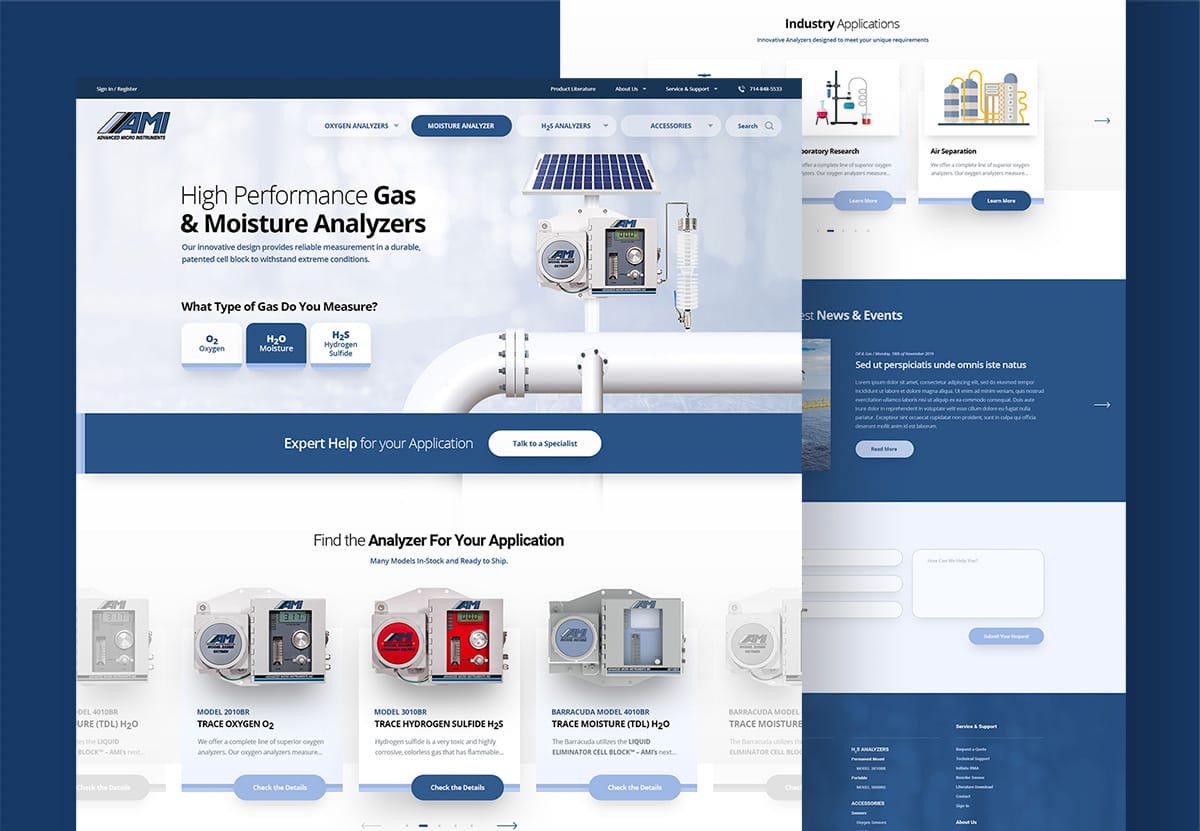
The buyer experience in practice
Our work with AMI connects technical products with their buyers through brand, website experience, ecommerce, and ongoing marketing.
Explore the partnership for the product and design context behind our approach.
Read the AMI StoryBefore we build
Web design is one part of Build. The scope connects the buyer experience, application architecture, inquiry handling, CRM, attribution, and executive reporting. We agree the required connections and acceptance criteria before development.
No. We assess what is holding the system back. If the current website supports the required experience and integrations, we can improve the connections without rebuilding the whole platform.
They are our preferred foundation for custom builds, not a requirement to discard working systems. Existing platforms, compliance requirements, integration constraints, and team workflows inform the final architecture.
Yes, when that is part of the scope. We can connect a CMS with the editing roles and publishing workflow your team needs. A CMS is optional; managed, code-based content can be simpler for a site that changes less often.
We scope connections to systems such as HubSpot, Salesforce, and Pipedrive around their available APIs, permissions, plan limits, and your sales workflow. Field mapping, routing, duplicate handling, and failure handling are agreed before implementation.
It can connect available source data with qualified pipeline and CRM-recorded sales. That is attribution, not proof of incremental impact. ROI analysis also needs reliable cost and margin data. Consent choices, missing identifiers, offline activity, and incomplete CRM records create gaps that must remain visible.
Timing depends on content readiness, migration volume, integrations, and approvals. Reusable components and preview deployments help us shorten review cycles. We agree milestones after scoping rather than promise a fixed launch date before understanding the work.
Build is scoped and priced separately from ongoing Growth management. Implementation, software costs, maintenance responsibilities, and any monthly service are defined in your proposal.
Build + Growth
Tell us what buyers, sales, and leadership need from the system.